Kids User Research Lab Design
Throughout my career, I've designed and built kids' user research labs across a variety of formal and informal settings. Years of hands-on experience conducting children's research have shaped an approach that prioritizes comfort, flexibility, and thoughtful observation. Every design decision is intentional—creating an environment where children feel safe and engaged, while giving researchers, designers, and product teams the tools and setup they need to run efficient sessions and uncover meaningful insights.
For this lab redesign project, a children's product company partnered with me to transform their research lab into a welcoming, flexible environment that better supported children and families while also meeting the evolving needs of their internal teams. The redesigned space needed to function as both a dedicated kids' research lab and a multipurpose workspace for product, design, and collaborative team activities.
Step 2: Design Refinement
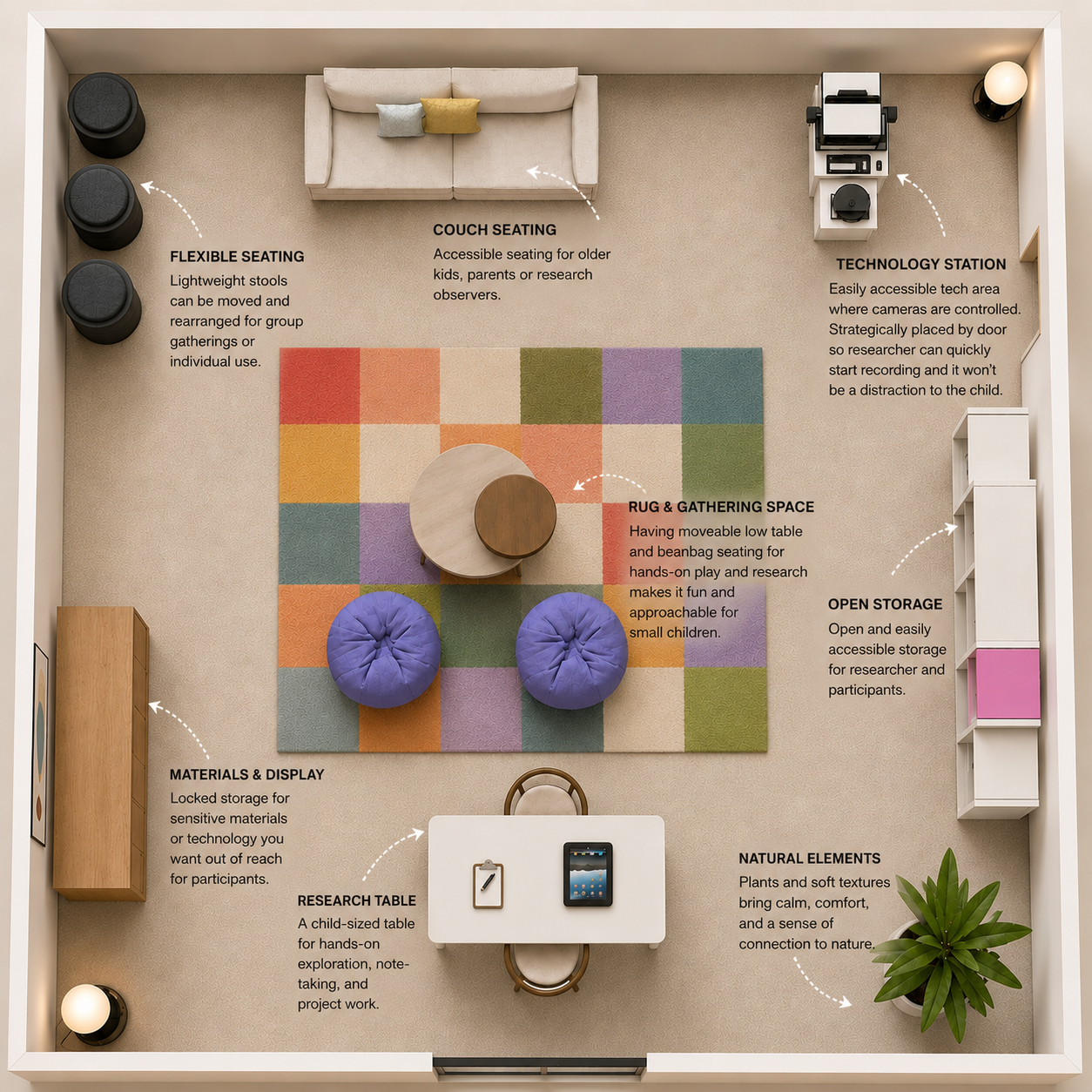
After several rounds of brainstorming and collaborative discussions with the team, I translated the concepts into a polished design rendering accompanied by the rationale behind each key design decision. Presenting the space in a more realistic and detailed format helped the team better visualize how the lab would function and understand the purpose behind each design choice.
Step 1: Design Concept Development
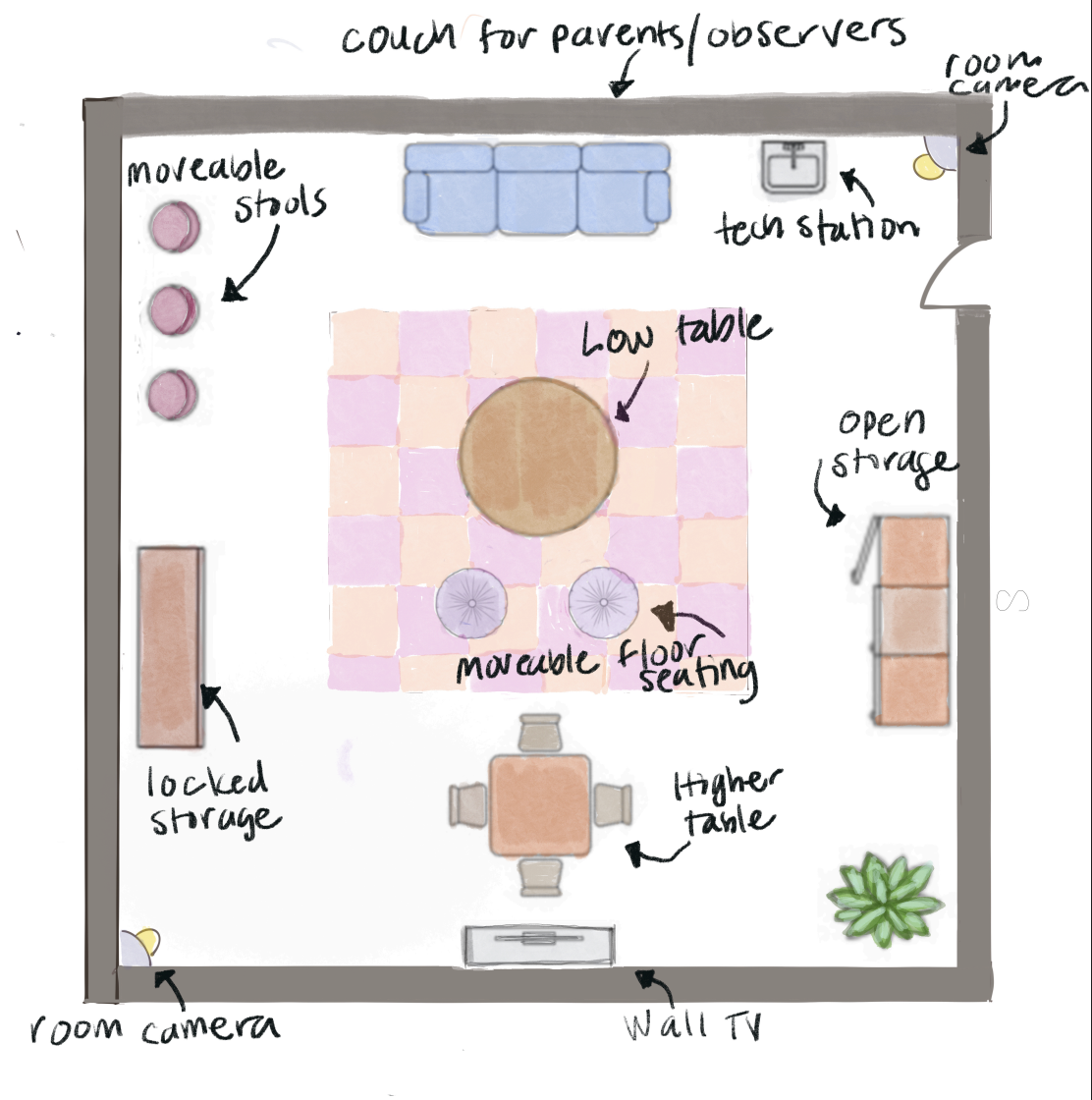
To kick off the project, I met with the team to learn about their goals, challenges, and vision for the redesigned lab. After observing how the existing space was being used, I translated those insights into initial concept sketches that explored more effective layouts and design solutions tailored to their needs.
Step 4: Post-Implementation Design Evaluation
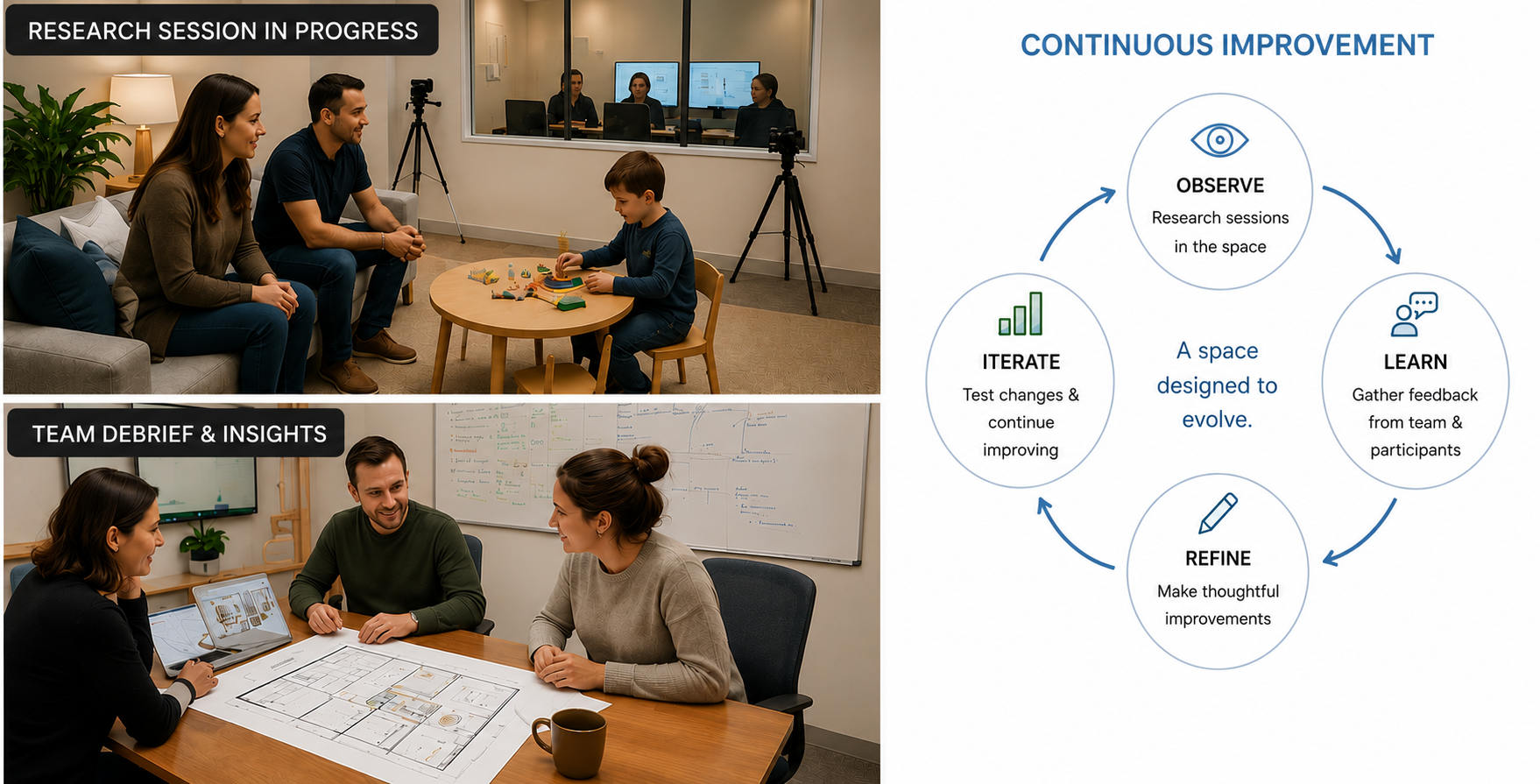
Once the redesigned lab has been in use for a while, I return to observe research sessions and meet with the team to evaluate how the space is performing. Seeing the lab in action often reveals new opportunities to improve workflows, participant comfort, and overall functionality. I use these insights to make thoughtful refinements because the research environment should be treated like any other user-centered design challenge. In other words, I user research the user research space.
Step 3: Design Board & Implementation Guide
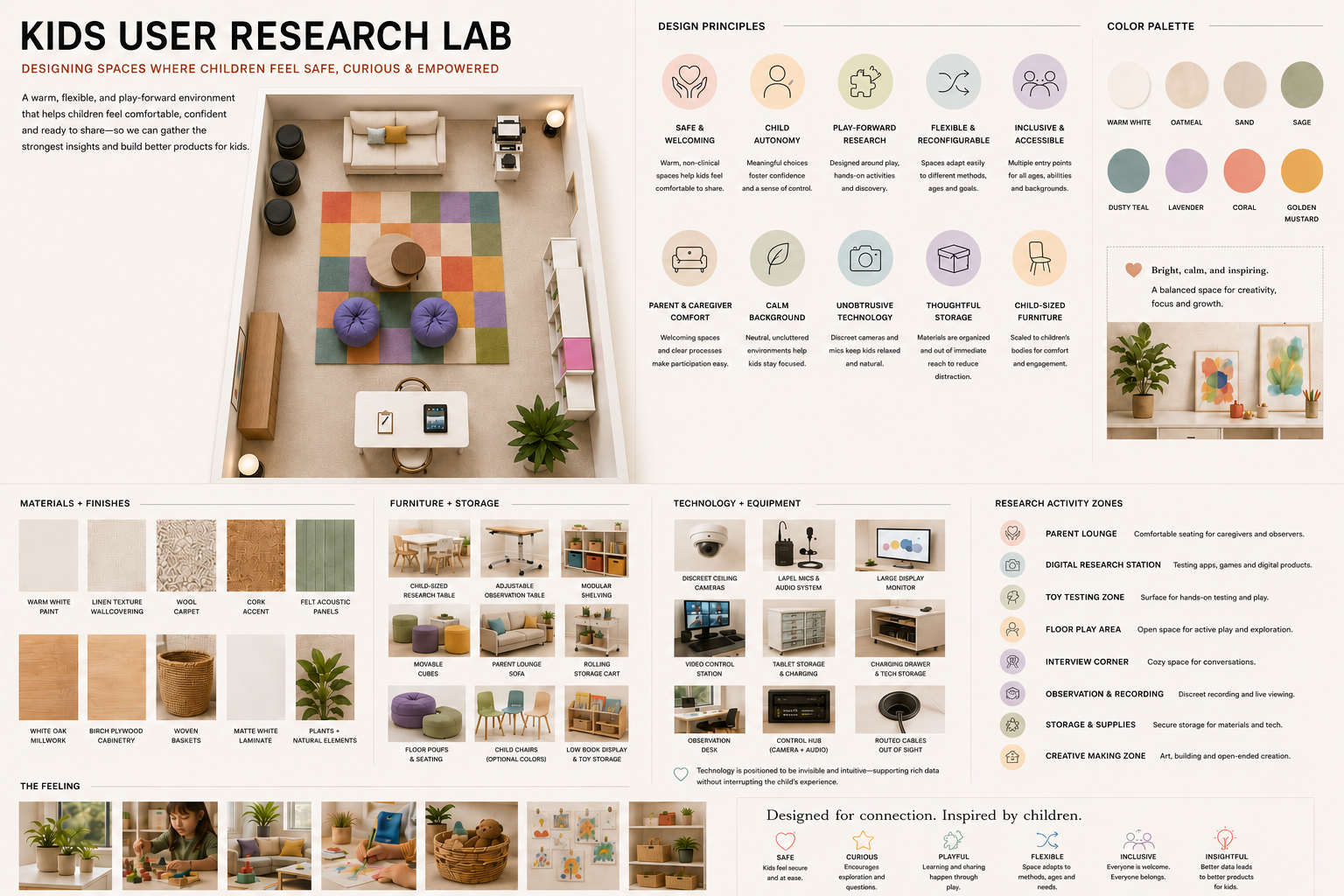
Once the design direction is approved, I develop a comprehensive design board that outlines finishes, color palettes, furniture selections, design principles, technology recommendations, and equipment specifications. This serves as a blueprint for implementation, giving the team clear guidance on what needs to be purchased, built, and installed.